Day-to-day clinical care
Assessment of common illnesses and minor injuries, management of ongoing health conditions, wound care and selected minor procedures within the approved clinical scope.
A site's medical capability should reflect the work taking place, the people doing it and the care available beyond the gate.
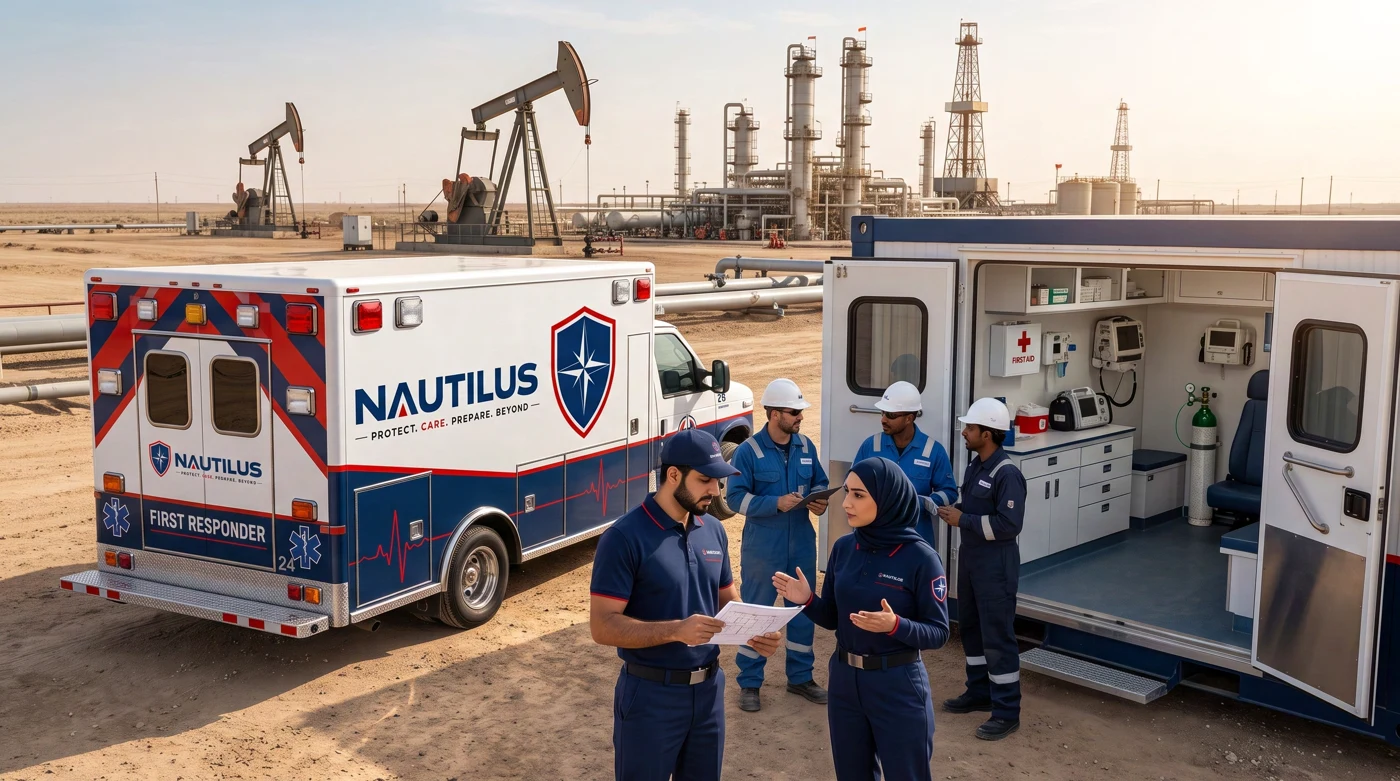
Nautilus can design, mobilise and operate medical facilities for remote, industrial, mining, energy and construction settings. Options range from compact first-aid posts to project clinics, with permanent, portable or mobile configurations considered against the site requirements.
The service model brings facilities, staffing, equipment and clinical scope together. It also connects the onsite team with client emergency arrangements and external referral providers.
Assessment of common illnesses and minor injuries, management of ongoing health conditions, wound care and selected minor procedures within the approved clinical scope.
Site-based assessment, triage, stabilisation and response capability matched to the risk profile. Basic or advanced life support requirements are considered alongside the client's emergency and incident-management arrangements.
Selected point-of-care tests and diagnostic services, with occupational testing such as audiometry, spirometry and vision screening where included in the service model.
Medicine and consumable management, infection-prevention arrangements, confidential clinical documentation and agreed reporting. Resource planning connects the clinic with ongoing supply and logistics needs.
Hospital liaison, referral coordination and access to remote clinical support where included. Clear escalation pathways identify when a patient needs care beyond onsite capability.
Medical posts, ambulance support and mobile response arrangements for activities such as shutdowns, commissioning, construction phases and planned events, subject to the agreed risk assessment and scope.
An effective brief considers workforce size and demographics, operating hours, likely clinical needs, occupational hazards and the time needed to reach definitive care. Project phases, expansion plans and access restrictions also influence the configuration.
These details help define where care is delivered, which resources are needed and how the service should connect with the rest of the operation.
Clinical capability, staffing, operating hours and delivery arrangements are confirmed for each project and remain subject to applicable requirements.